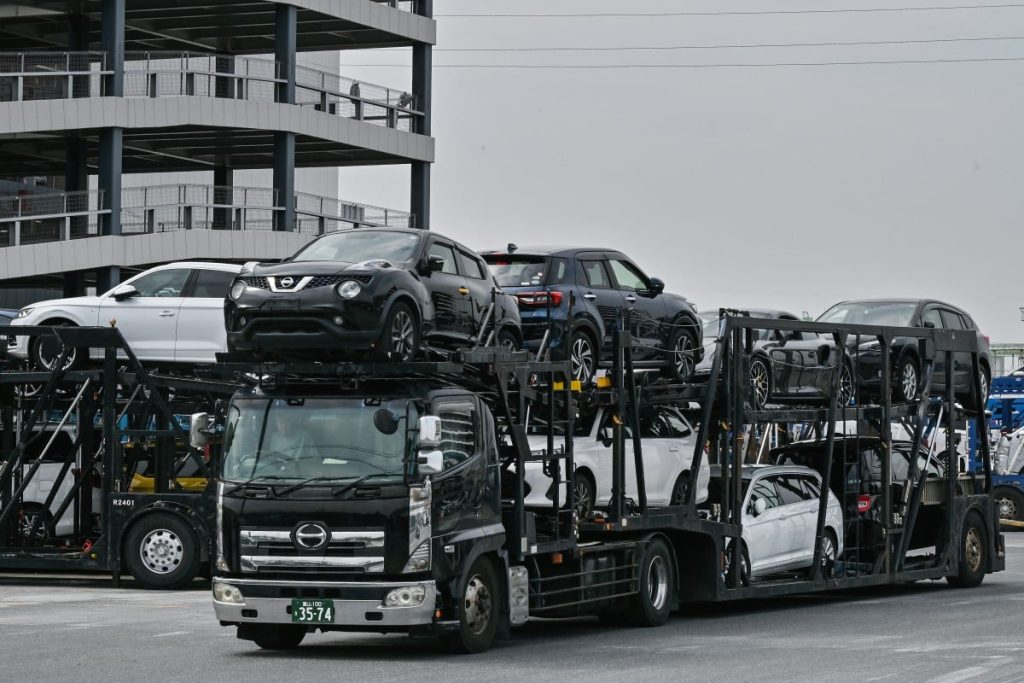

WASHINGTON, United States — US President Donald Trump signed an order Thursday to lower tariffs on Japanese autos. This happened as Washington moved to implement its trade pact negotiated with Tokyo.
Japanese autos will face a 15-percent tariff instead of the current 27.5 percent. Meanwhile, the level for many other goods will similarly be capped at 15 percent. This is according to the text of the executive order published by the White House.
The outcome marks a win for Japan, after Tokyo’s tariff envoy headed to Washington on Thursday to press Trump to sign the document for the changes. This was weeks after both sides announced their agreement.
READ: Japanese auto exports to US dive in June as tariffs bite
While the two countries had initially unveiled a trade pact in late July, they appeared to diverge in its details.
Trump in early August implemented higher tariffs on Japan as part of a flurry targeting dozens of economies. Its 15-percent rate stacked on existing levels for many products.
Japan’s tariffs envoy Ryosei Akazawa had earlier told reporters that Washington was expected to revise the rule.
Will apply retroactively
According to the new order, the 15-percent cap for many products will apply retroactively to goods shipped from Aug. 7. That was the date when the higher duties on dozens of economies took effect.
The modifications are to be made within seven days of the rule being published on the Federal Register.
Apart from Washington’s country-specific tariff levels, Trump has also imposed separate sector-specific tariff rates. These include a 25-percent duty on autos and parts.
This, coupled with an existing 2.5-percent tariff the Japanese auto industry faced, took the overall level to 27.5 percent.
The hefty duties had marked a heavy blow to Japan and its crucial auto sector. It accounts for around eight percent of the country’s jobs.
READ: Foreign visitors to Japan total record 3.43 million in July
Japan’s deal wins it a similar reprieve to the European Union. The EU also has a 15-percent maximum tariff on many products.
Akazawa was also expected to engage in further discussions during his US trip about Trump’s assertion that Japan would make investments worth $550 billion in the United States.
According to Trump’s order, the investments “will be selected by the United States Government.” But the document did not go into detail.
Trump has said the United States will keep 90 percent of the profits from the investments. Japan has said this will mostly consist of loans and loan guarantees.
Akazawa had cancelled an earlier visit after Washington said that it was considering including a reduction in Japanese tariffs on agricultural products in the presidential order, the Nikkei business daily reported.
Trump has long pressed Japan to import more American rice.
